
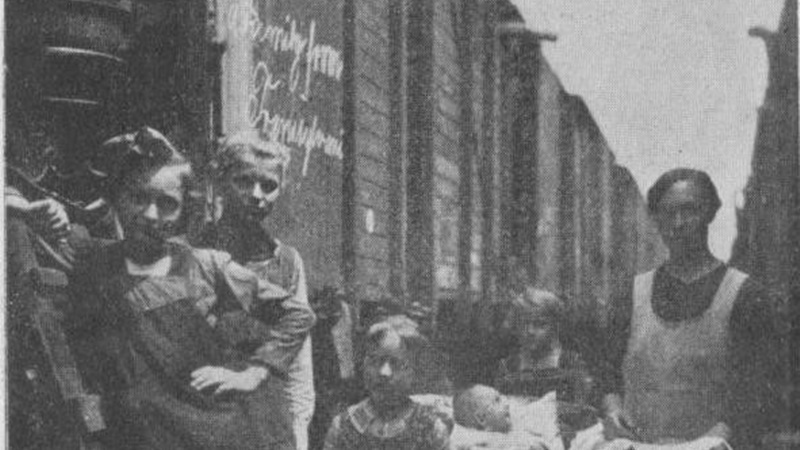
The history of post-World War I refugees has remained severely underresearched in Hungarian historiography. No synthesis of the subject matter has been published since the 1983 monography by István I Mocsy (The Effects of World War I: The Uprooted: Hungarian Refugees and Their Impact on Hungary's Domestic Politics, 1918-21). Unfortunately, Mocsy himself did not use archival sources in his research. Studies focusing on one or the other aspect of the issue area published since Mocsy’s monograph have also cited data found in the book or the printed reports of the National Refugee Office. It is time to move beyond this empirical horizon, and investigate in greater depth processes related to population movements, the responses of state bureaucracies, citizenship policies in Central Europe, mnemonic practices and issues of reintegration as well as the personal experiences of fleeing, female points of view, the variation in individual motivation, including the patterns and mechanisms of decisions to leave and of choosing a destination.

Source: "Jelentés az Országos Menekültügyi Hivatal négy évi működéséről" (Budapest,1924)
New research on World War I has demonstrated that the refugee dimension of the Trianon peace treaty was not a self-contained phenomenon: it was preceded by the 1916 population movement in the wake of the Romanian entry into the war, and parallels can be drawn with the situation of wartime refugee from Galicia (despite the perceptions surrounding this latter group both in Vienna and in Budapest). Mechanisms put in place in response to the refugees become fully understandable only by drawing on emerging subfield of international law (shaped by, inter alia, refugees from Armenia and the masses displaced during the Balkan Wars). Parallels may also be drawn with events that unfolded concurrently, notably the Turkish and Greek population movements. In view of the aforementioned perspectives and the general theme of the conference we especially invite contributions exploring the following aspects:
- Citizenship policies in the successor states, in Central Europe and in Hungary
- International perception of the refugee question and initiatives of the League of Nations
- Activities of international aid and religious organizations and of the Nansen Committee
- Population exchange, resettlement, expulsion during and after World War I, especially in the context of the Greco-Turkish population exchange and regional projects (including, but not limited to Polish-German, Czechoslovak-Austrian/German, Yugoslav-Italian relations)
- Hungarian governmental policies towards refugees; institutions, collections and the flight of capital
- The experience of resettlement in personal testimonies, especially with regard to female and infant experiences
- Additional forms of population movement and points of contact: Belgian and Dutch children’s holiday programs, non-Hungarian refugees in Hungary (Armenians, White Russians, etc.), settlement plans and the return of POWs
- The integration of refugees in Hungary: ritual spaces, organizations, identities, individual life choices.
- The memorialization of refugee experience and the memory of fleeing in high and popular literature, the fine arts, in photography and in public spaces,
- Railroad cars, permanent camps and mass accommodations: living conditions and space usage.
- Geographical and sociological surveys relating to refugees: distribution, zones of settlement, effects on electoral politics and congregational memberships.
Prospective participants are invited to apply with an abstract containing the presenter’s name and the title of the presentation and no longer than 2500 character, as well as a short academic CV (no longer than two pages) by mailing the above to lendulet.trianon.100@gmail.com before 15 March, 2018. Presenters will be selected from among the applicants by selection committee composed of Zsombor Bódy, István Gergely Szűts, Orsolya Réthelyi and Balázs Ablonczy. The conference will be held the Center for Research in the Humanities of the Hungarian Academy of Sciences in Budapest. Meals will be provided for participants. Travel and accommodation costs can be covered for some participants, doctoral students will be given preference in this regard. Reimbursement requests should be marked clearly in the resumé. Abstracts and papers may be submitted in Hungarian or in English.
Presentations will be published in written form in the course of 2019 by the Trianon 100 Momentum Research Group of the Hungarian Academy of Sciences.